
Virtual RoC
Drill
The challenge
Making RoC understandable in practice
Rehearsal of concept (RoC) drills play a central role in planning and coordinating offshore wind projects. They bring together logistics, sequencing, and collaboration across both onshore and offshore environments, where timing and dependencies need to align.
The challenge was to create a solution that could:
- Build a clear understanding of the RoC concept and its value
- Support learning through hands‑on interaction
- Allow users to practise sequences and decisions without real‑world risk
- Deliver the experience in a visually strong, intuitive, and accessible format
Cadpeople developed the Virtual RoC Drill as part of the DigiWind initiative, ensuring that the solution is grounded in real industry needs while being designed for reuse across organisations.
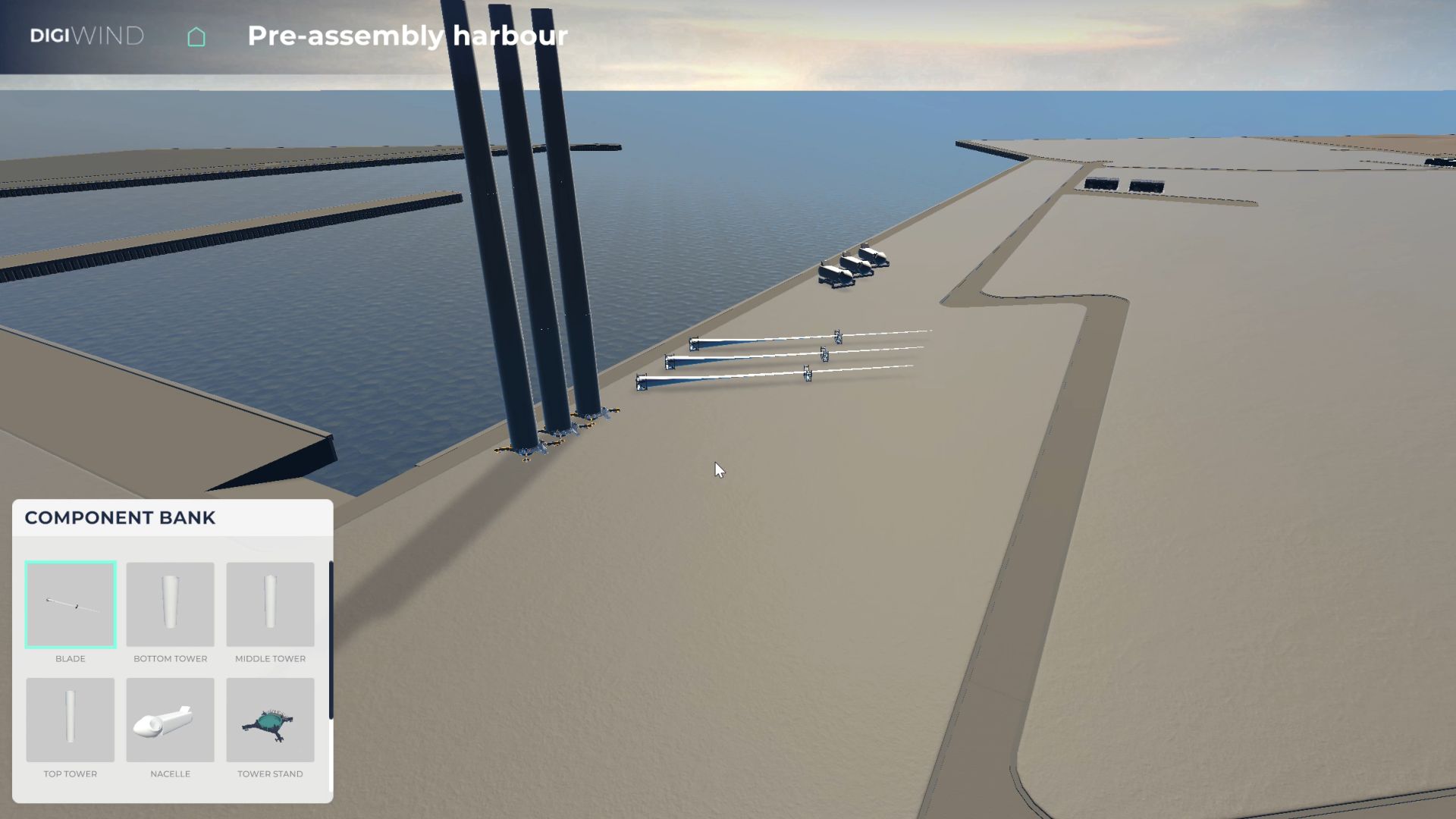
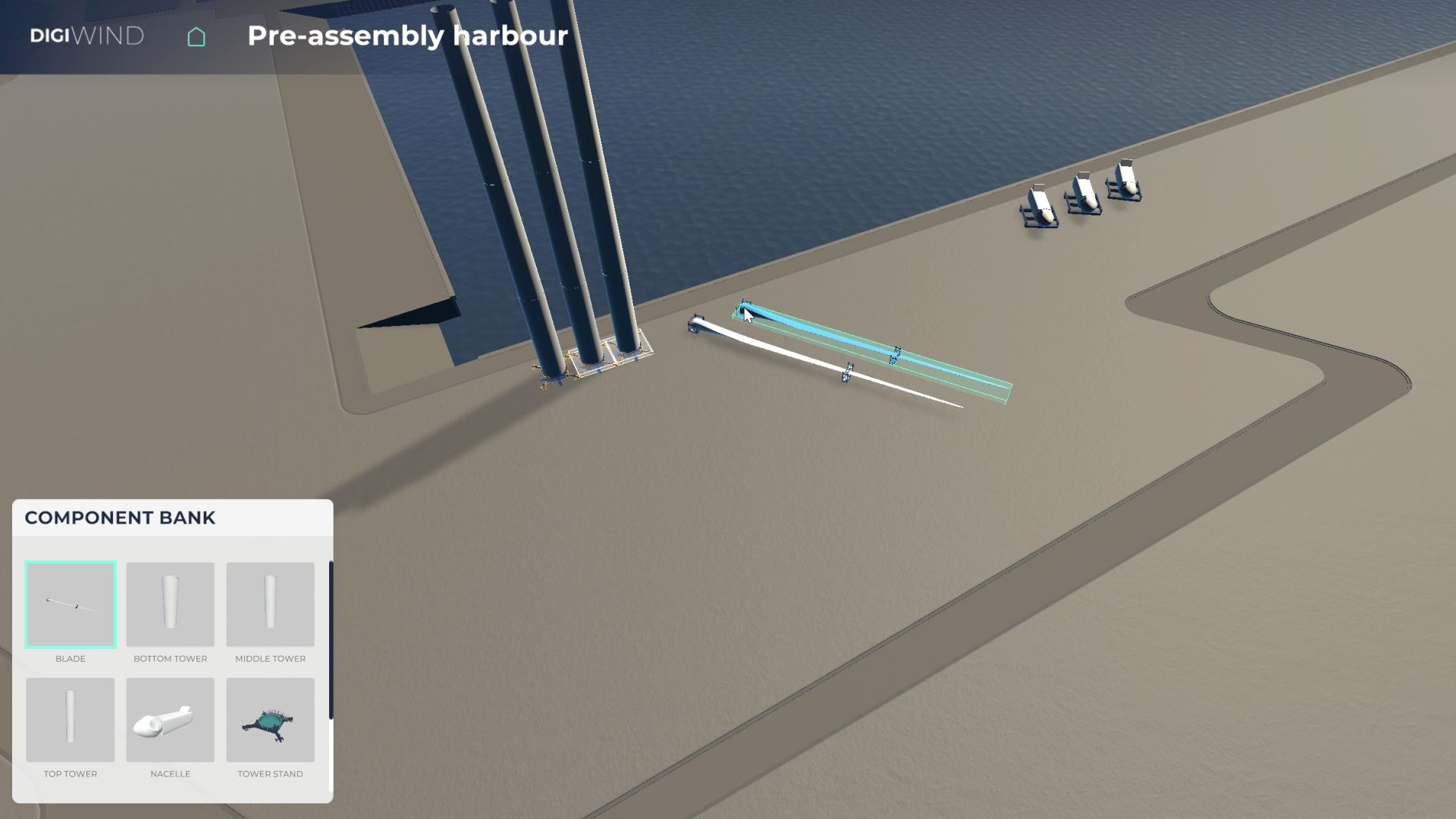
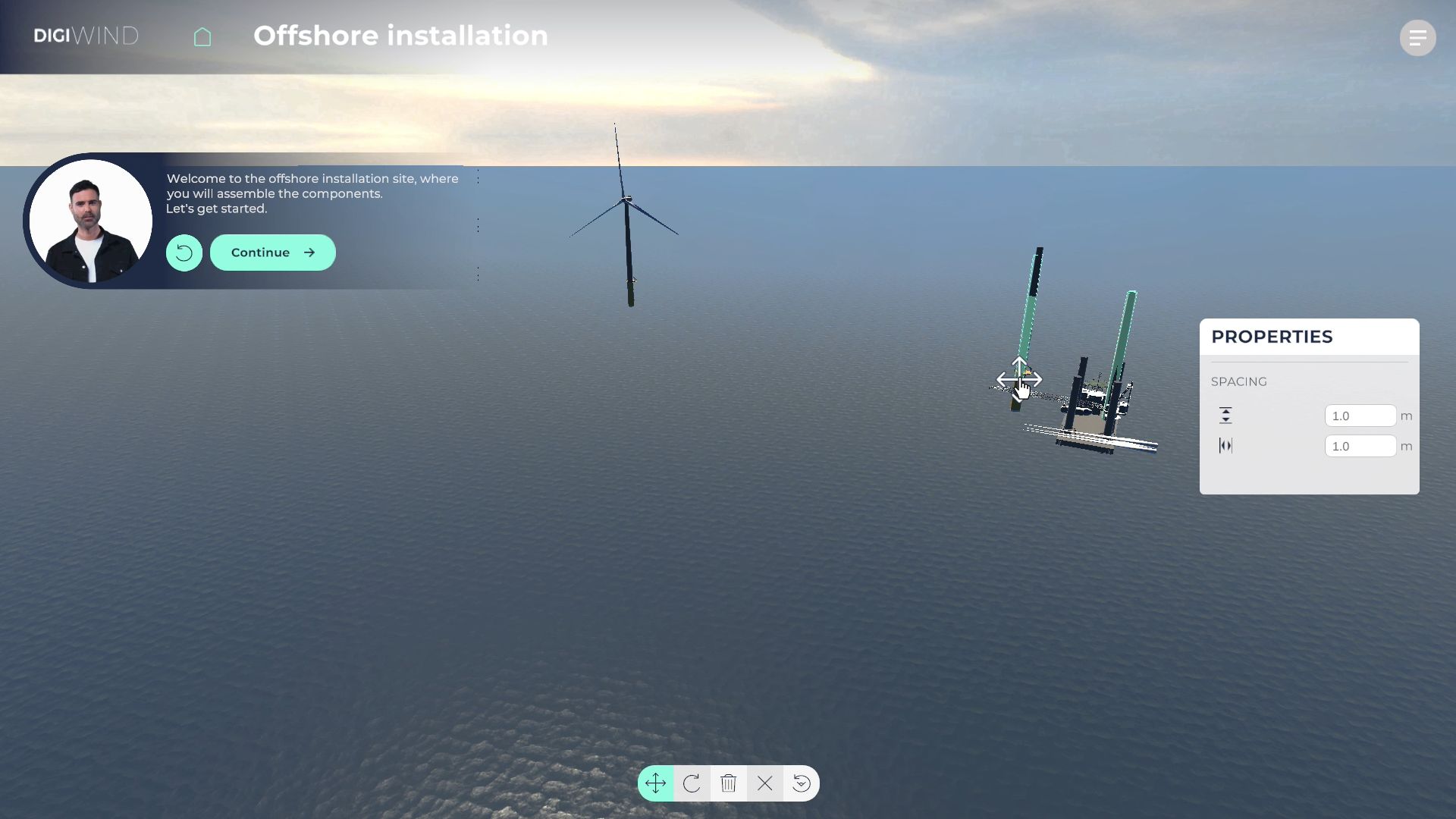
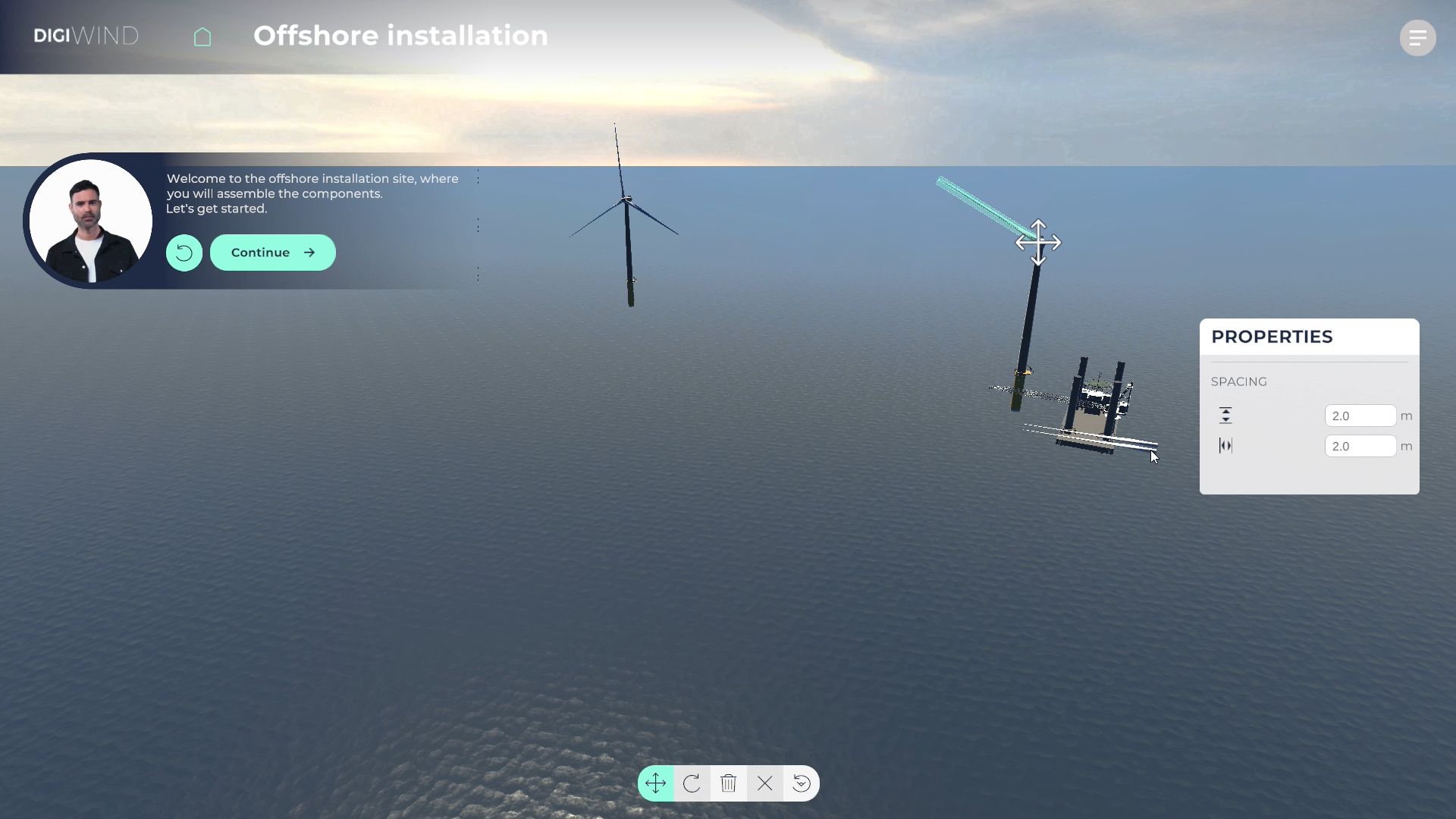
The solution combines a structured introduction with an interactive 3D environment. Users are first guided through the logic behind RoC drills and then move directly into a virtual sandbox where they work with turbine assembly and installation across both port and offshore settings.
The induction is designed to support the user in four key ways:
The solution
Learning and reuse
A clear introduction to RoC
Users are introduced to the principles behind Rehearsel of concept drills, including how sequences, dependencies, and workflows come together across onshore and offshore environments.
Guided learning that adapts to the user
The content can be followed step by step or explored more freely, allowing both new and experienced users to approach the material at a pace that fits their level of knowledge.
An AI presenter that connects the experience
An AI presenter introduces scenes, explains objectives, and ties the different steps together, creating a consistent thread from introduction through to practical application.
Clear explanations that enable action
Workflows, terminology, and interdependencies are explained in context, with spoken guidance supported by on‑screen text. This ensures clarity without interrupting the flow of the experience.
A space to test, try, and learn
At the core of the solution is the virtual RoC sandbox, where understanding is translated into action.
Users navigate freely in a real‑time 3D environment and work directly with the construction process. They place and assemble turbine components, plan logistics, and carry out installation steps across onshore and offshore locations. The environment allows users to test decisions, adjust their approach and build confidence through repetition.
Because the training takes place in a virtual space, users can make mistakes and learn from them without consequences.
Training based on real construction flows
The experience is built around two scenarios that reflect key stages of offshore construction.
One centres on pre‑assembly at port, where users work with incoming components, temporary storage and early assembly steps. The other focuses on offshore installation, covering the mounting of tower sections, nacelle and blades.
Learning elements are integrated directly into the experience through contextual explanations that add perspective without interrupting the flow.
Designed to be clear and accessible
The visual expression is based on a refined low‑poly style with a controlled colour palette, ensuring that the environment remains clear and easy to navigate while maintaining a strong sense of place.
The solution runs directly in a browser and performs on standard laptops, making it easy to deploy across organisations without specialised hardware. It balances overview and detail in a way that supports focus and understanding throughout the experience.
The Virtual RoC Drill creates a space where complex construction processes can be understood and practised before they are applied in reality.
It supports more effective onboarding, aligns project teams around shared workflows and provides a safe environment for building practical understanding. By combining structured learning with hands‑on training, the solution helps users move from knowing the process to being able to work with it.
The value
Learning by doing
MEET THE TEAM
The x factor: turning complexity into something workable
Developing the Virtual RoC Drill required close collaboration between domain knowledge and digital execution.
Cadpeople brought together learning specialists, 3D designers, developers, and UX experts to translate a complex construction methodology into a solution that is both technically robust and easy to use. The result is not just a visualisation of the process, but a tool that supports real understanding and better decision‑making.


Alexander, concept and strategy

Arash, motion

Celia, Art Director

Jens, relations

Gudjon, art direction

Laura, Project Management

Klaus, important stuff

Lone, art direction

Ludovic, 3D Production

Nikolaj, development
Originally developed within the DigiWind project, the Virtual RoC Drill is built as a flexible foundation that can be extended and adapted to new use cases.
This makes it possible to apply the solution across organisations, training setups, and related industries where coordination, sequencing, and spatial planning play a critical role.
The perspective
A foundation that can be extended
PSST… THERE’S MORE.


