THE CHALLENGE
How do we make heat pump installation training more intuitive, engaging and memorable?
THE SOLUTION
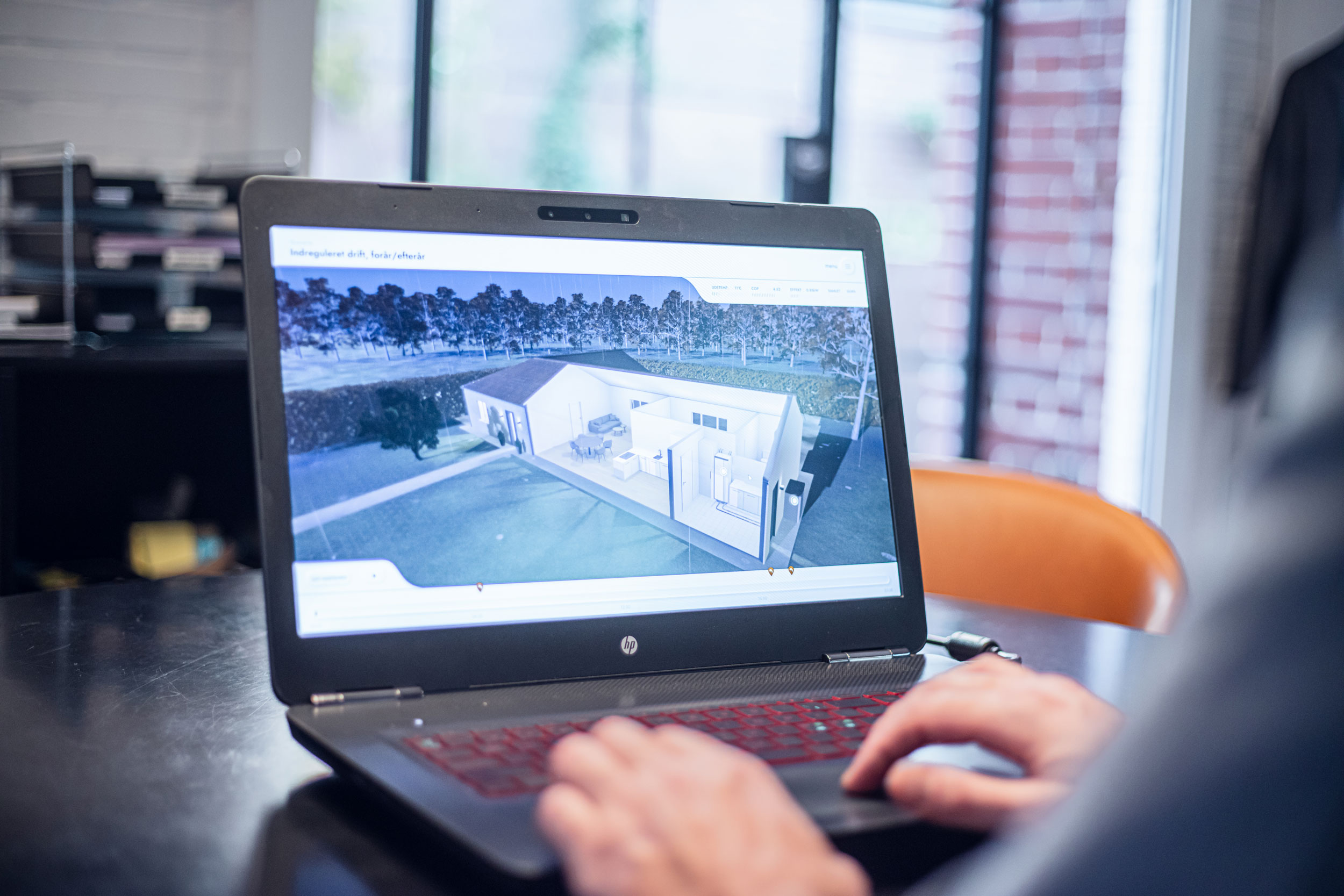
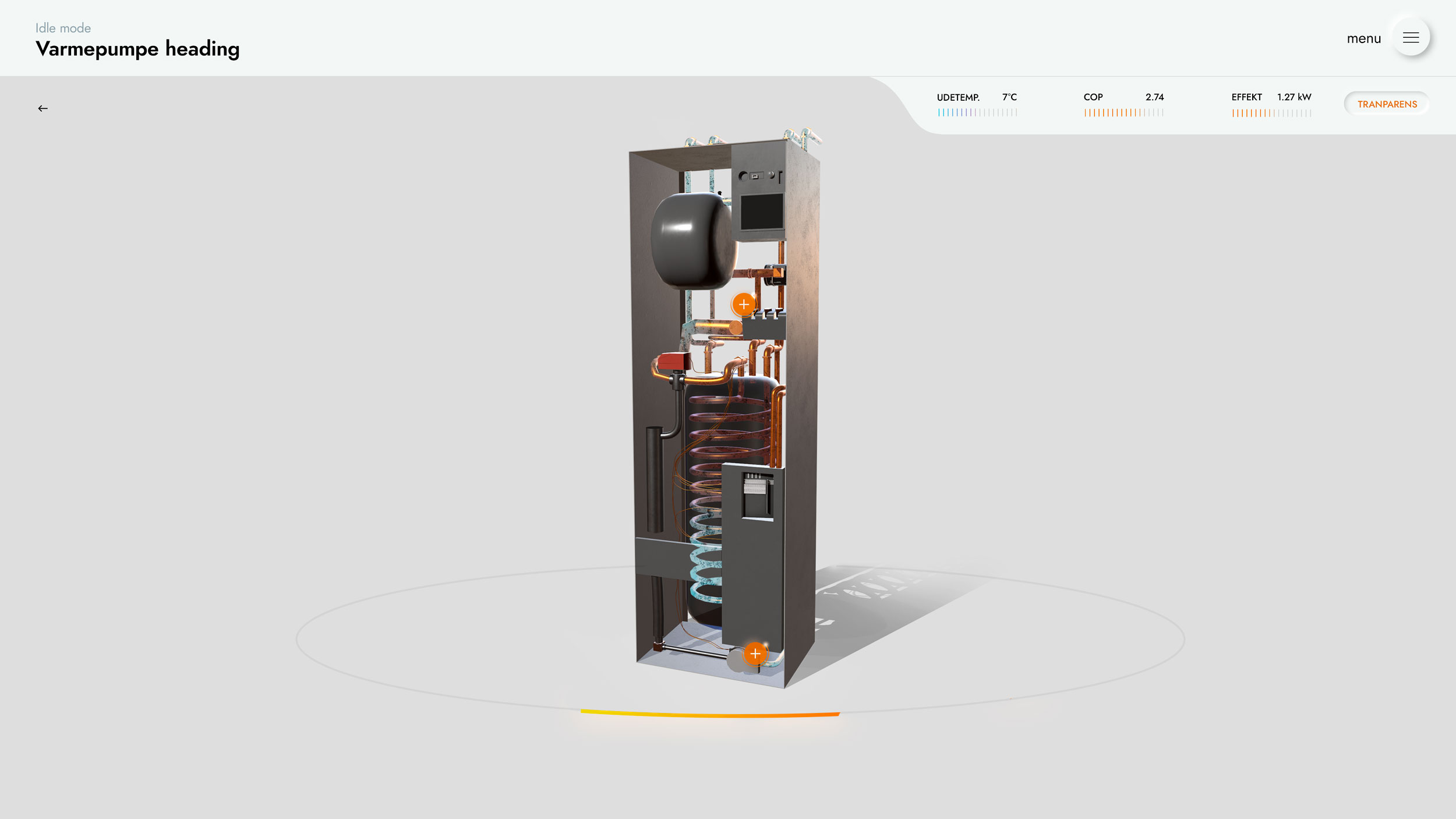
Use a touch screen to visualise the things that couldn’t be shown before and give trainees a clearer, more immersive way of understanding how a heatpump behaves.
Introducing new features
We have recently expanded the simulator with new interactive features and have therefore updated this case to reflect the latest version of the solution. If you already know the original simulator, feel free to jump straight to the new features below.


The demand for heat pump installations increases
Touch screen visualisations take heat pump installation training to the next level and help unlock a vital part of climate transition.
In 2019, Denmark promised to reduce greenhouse gas emissions by 70 percent before 2030.
To meet this ambitious goal, the demand for climate-friendly heat pumps will increase and to install all these new, high-tech pumps, we will need a lot of competent technicians.
Together with EVU, we developed a training tool that makes learning more intuitive, engaging and memorable for future technicians.
Blended learning with a touch screen
The touch screen solution places the heat pump in a shared, digital learning environment. It allows instructors and trainees to explore the system together and creates a more active form of learning, where discussion and experimentation are part of the process.
Rather than simply presenting theory, the simulator supports collaborative learning and shifts the instructor’s role from lecturer to facilitator of hands-on exploration. Trainees can also access the simulator outside the classroom, making it a flexible learning tool that fits different needs and learning paces.
An update
Showing the elements that could not be shown before
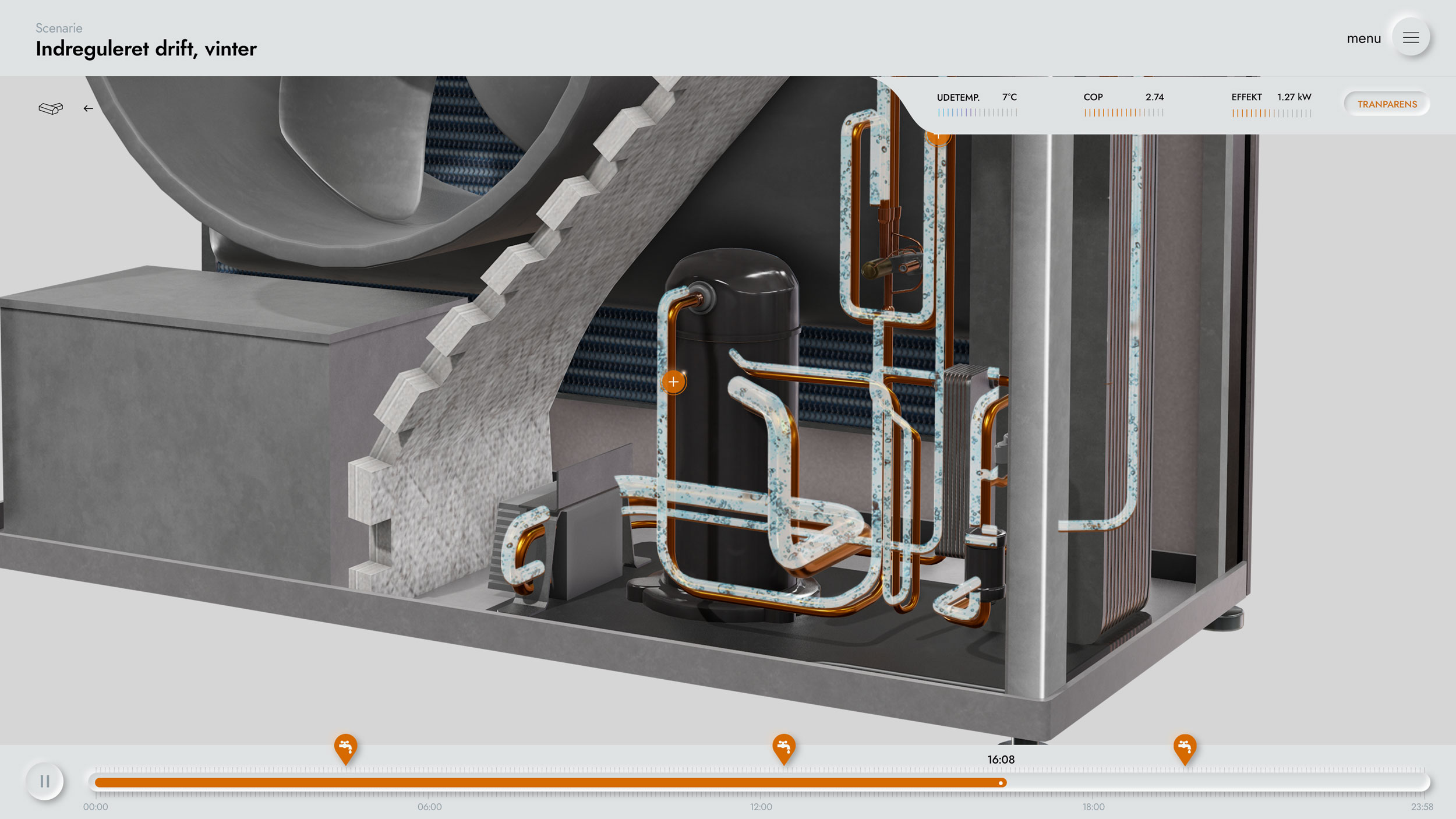
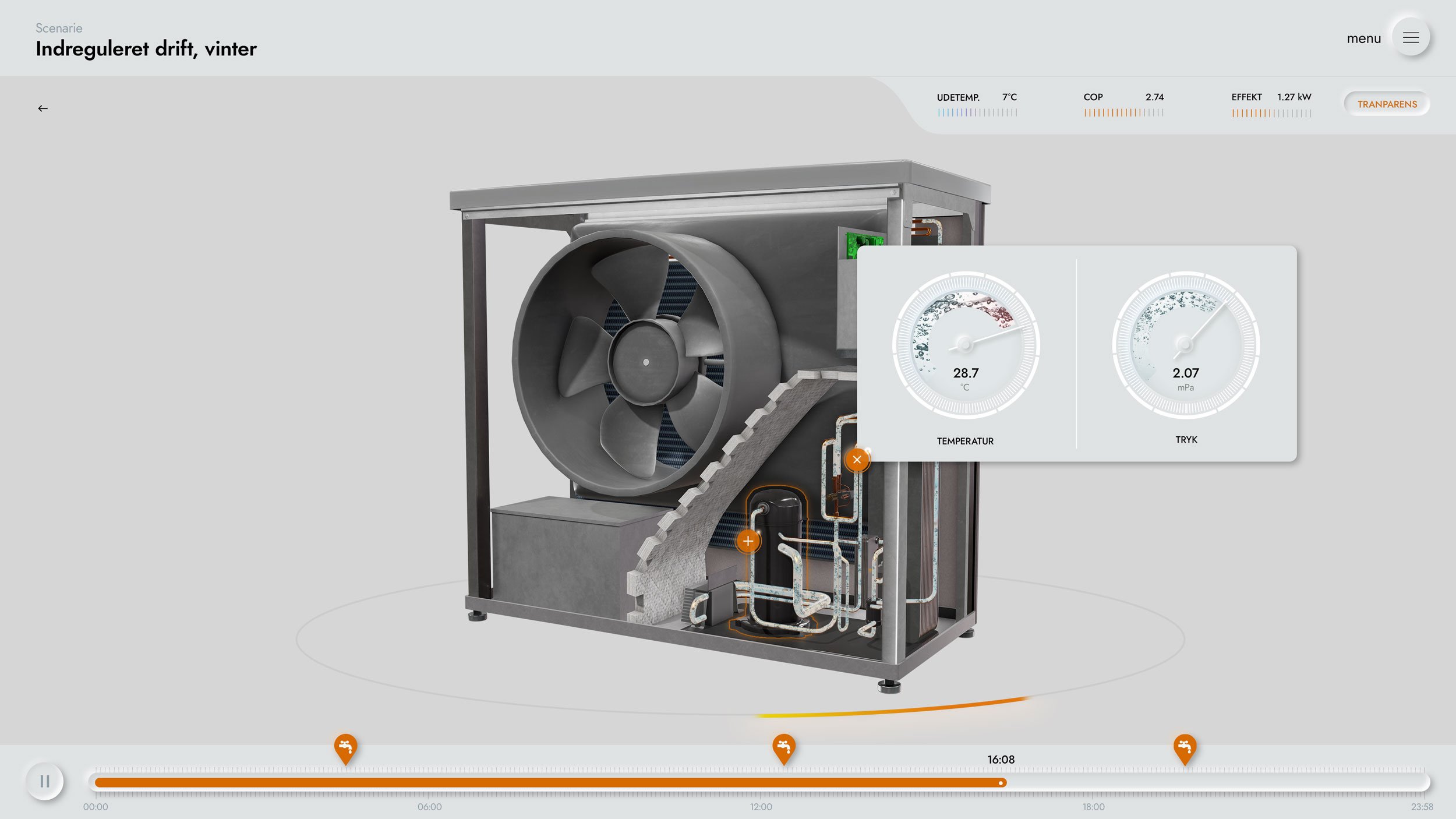
The simulator was originally created to reveal the parts of a heat pump that are normally hidden inside insulation, pipes and casings. By making flows, temperatures and internal components visible, complex processes became easier to understand and the simulator quickly became a key part of EVU’s training.
Because the solution proved so valuable in practice, we decided to take it even further. Together with EVU and the Danish Technological Institute, we expanded the simulator with new interactive and calculation-driven features.
An update
Showing the elements that could not be shown before
From the beginning, the goal of the simulator was to visualise the parts of a heat pump that are normally hidden inside insulation, pipes and casings. Instead of relying only on abstract diagrams, learners could finally see flows, temperature and internal components in action. This made complex processes easier to understand and quickly turned the simulator into an important part of EVU's training.
Because the simulator was used so actively and received so positively, we decided to take it even further. Together with EVU and Danish Technological Institute, we introduced new layers of interactivity and calculations that take the simulator to a completely new level.
Let’s break down the new features.
Feature #1
Adjustable input parameters and real-time calculations
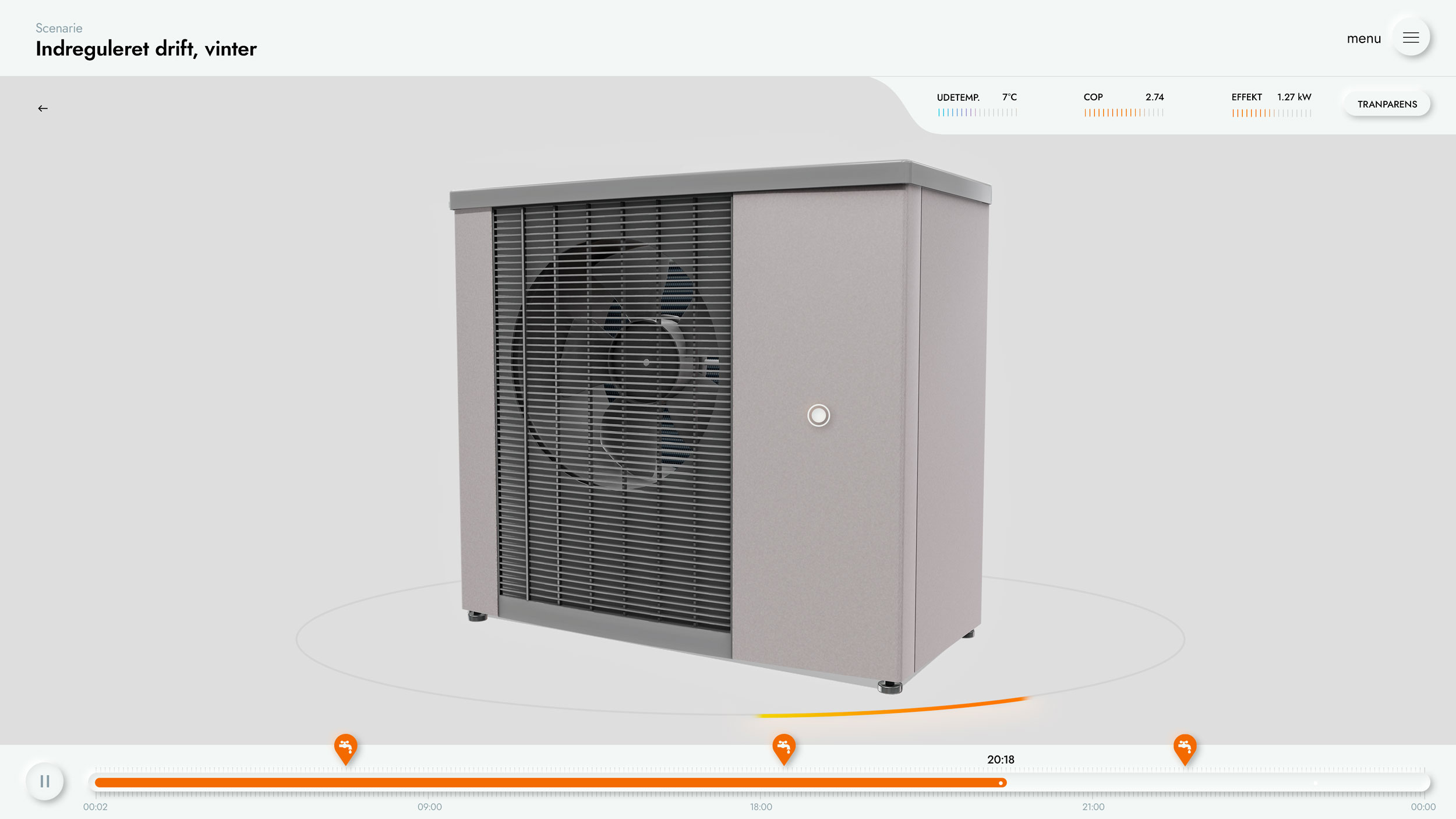
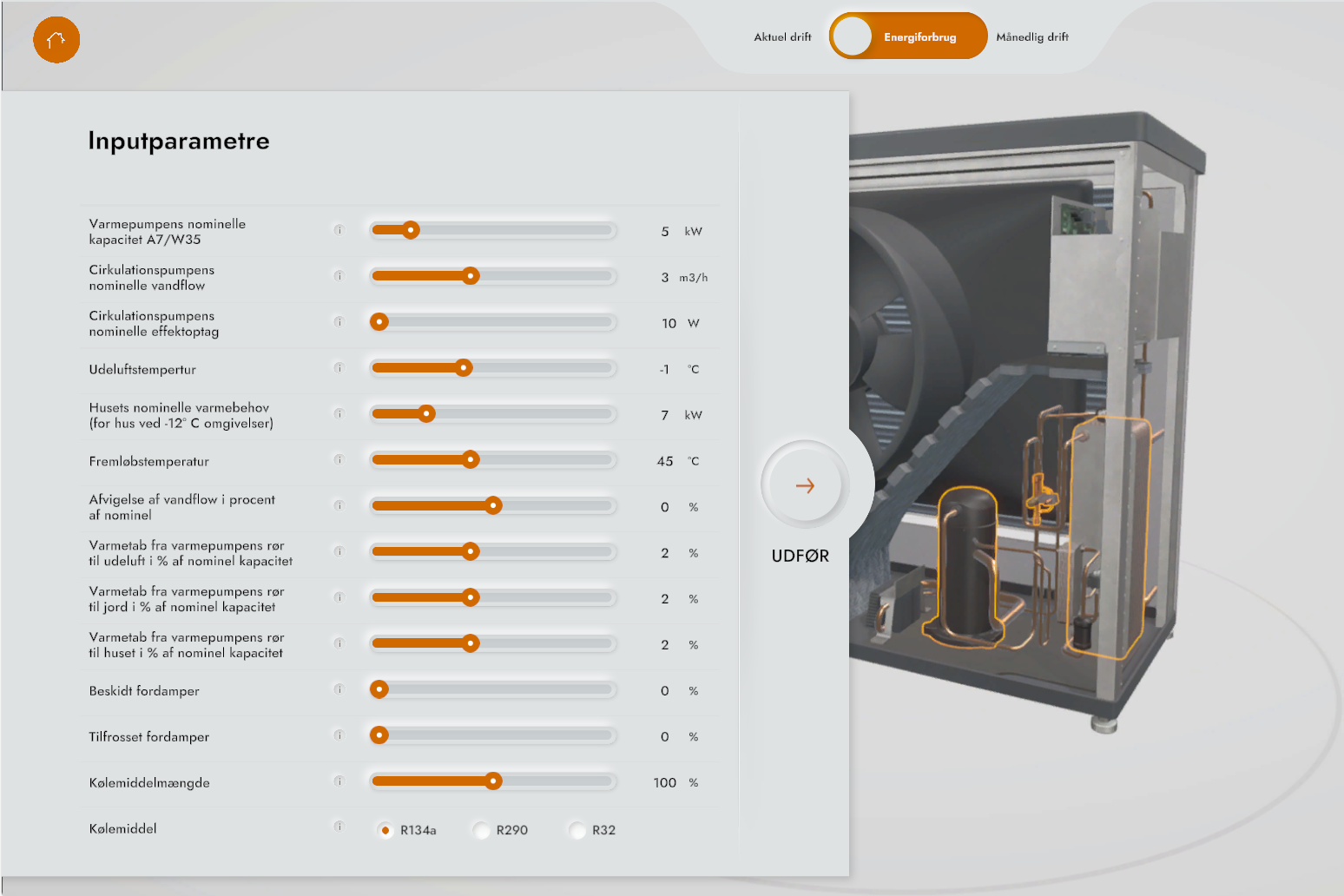
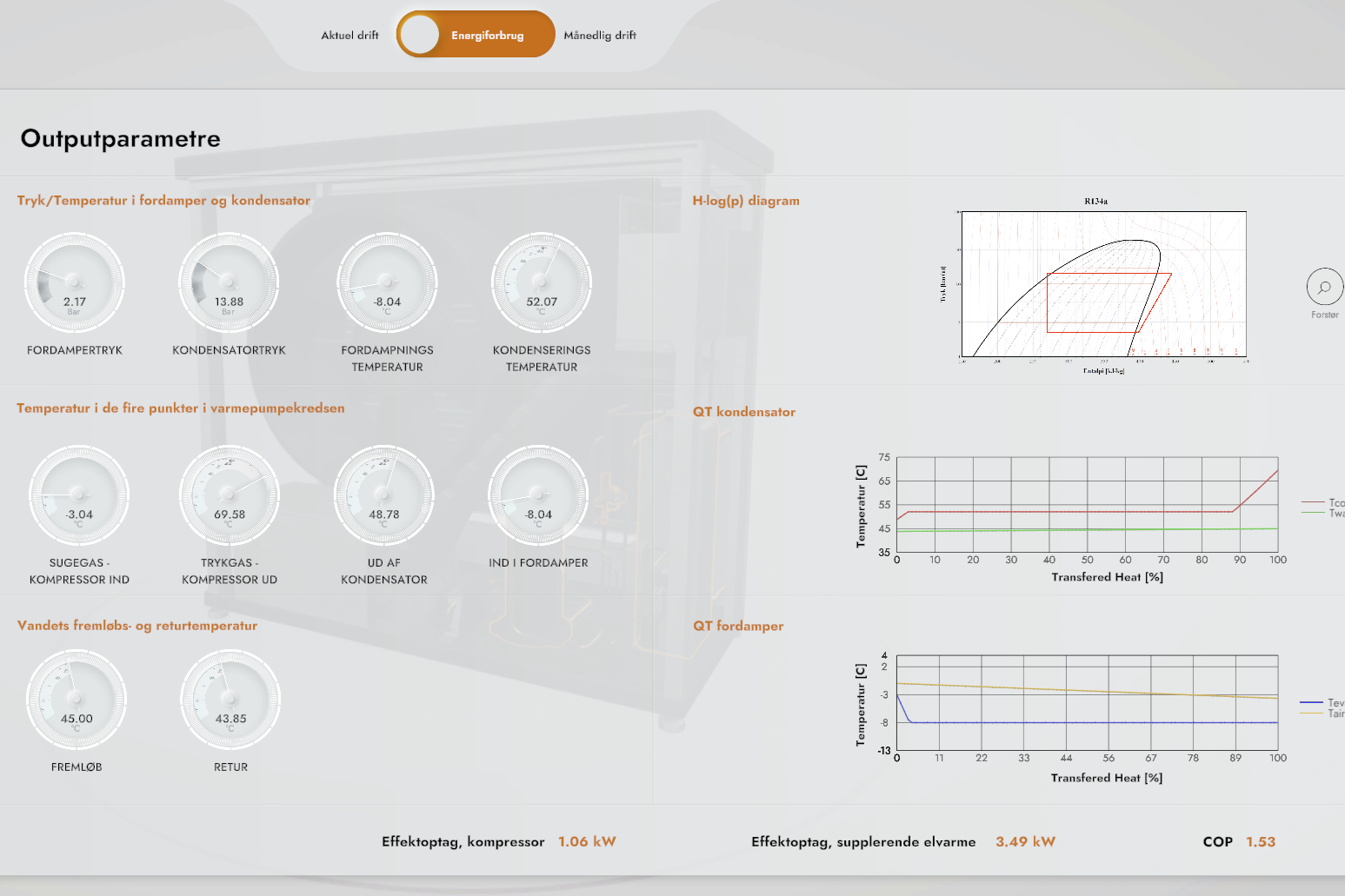
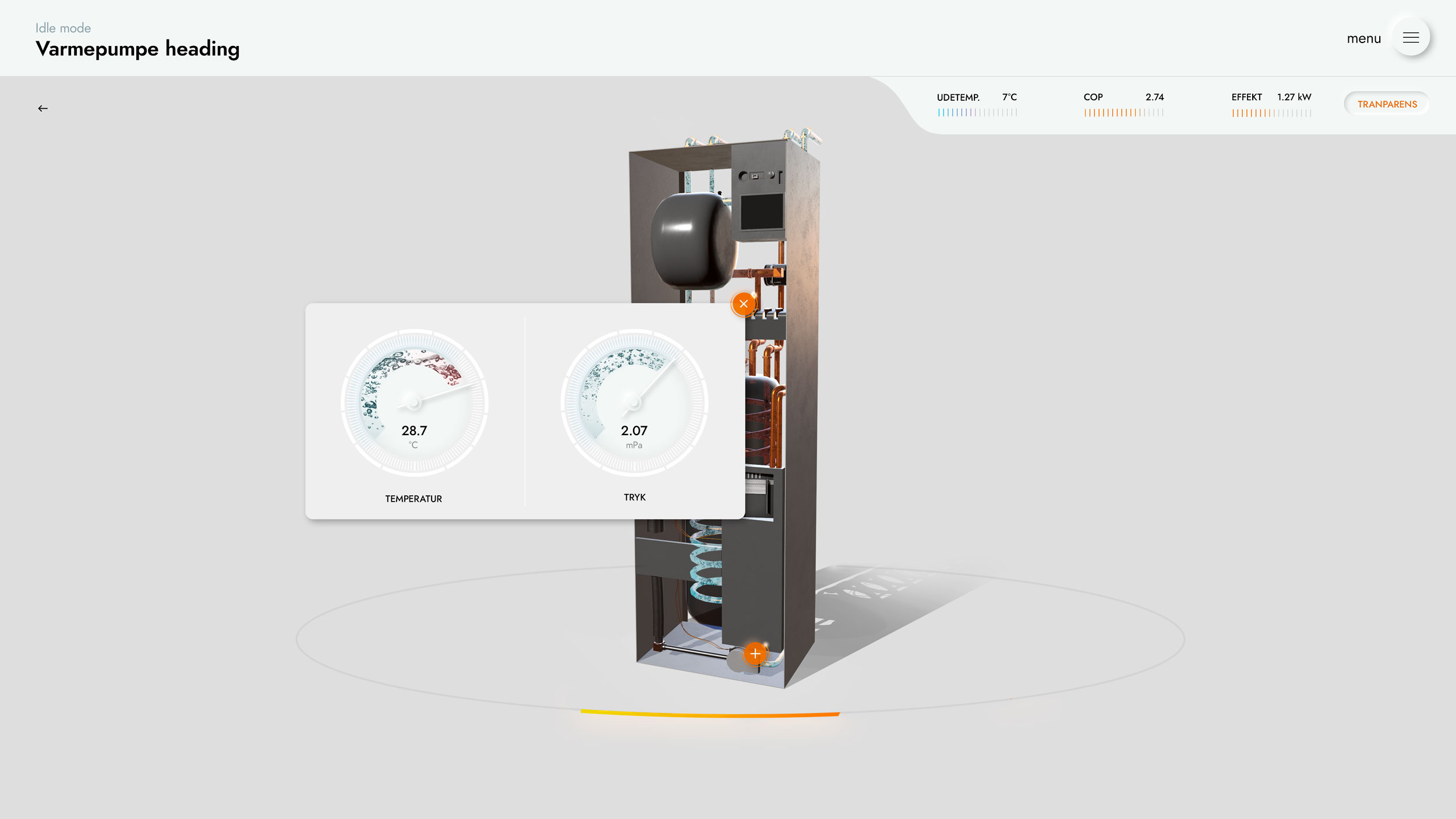
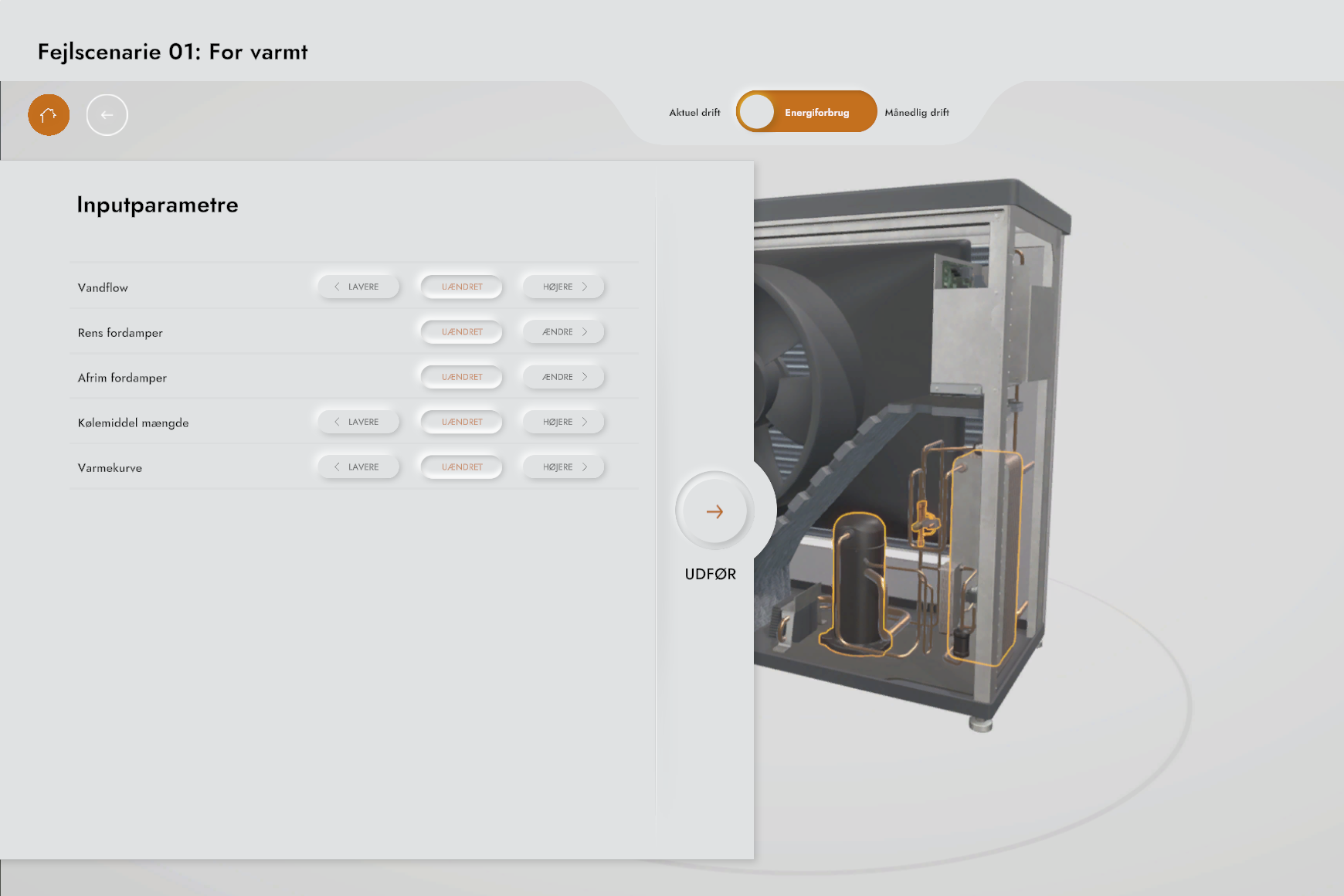
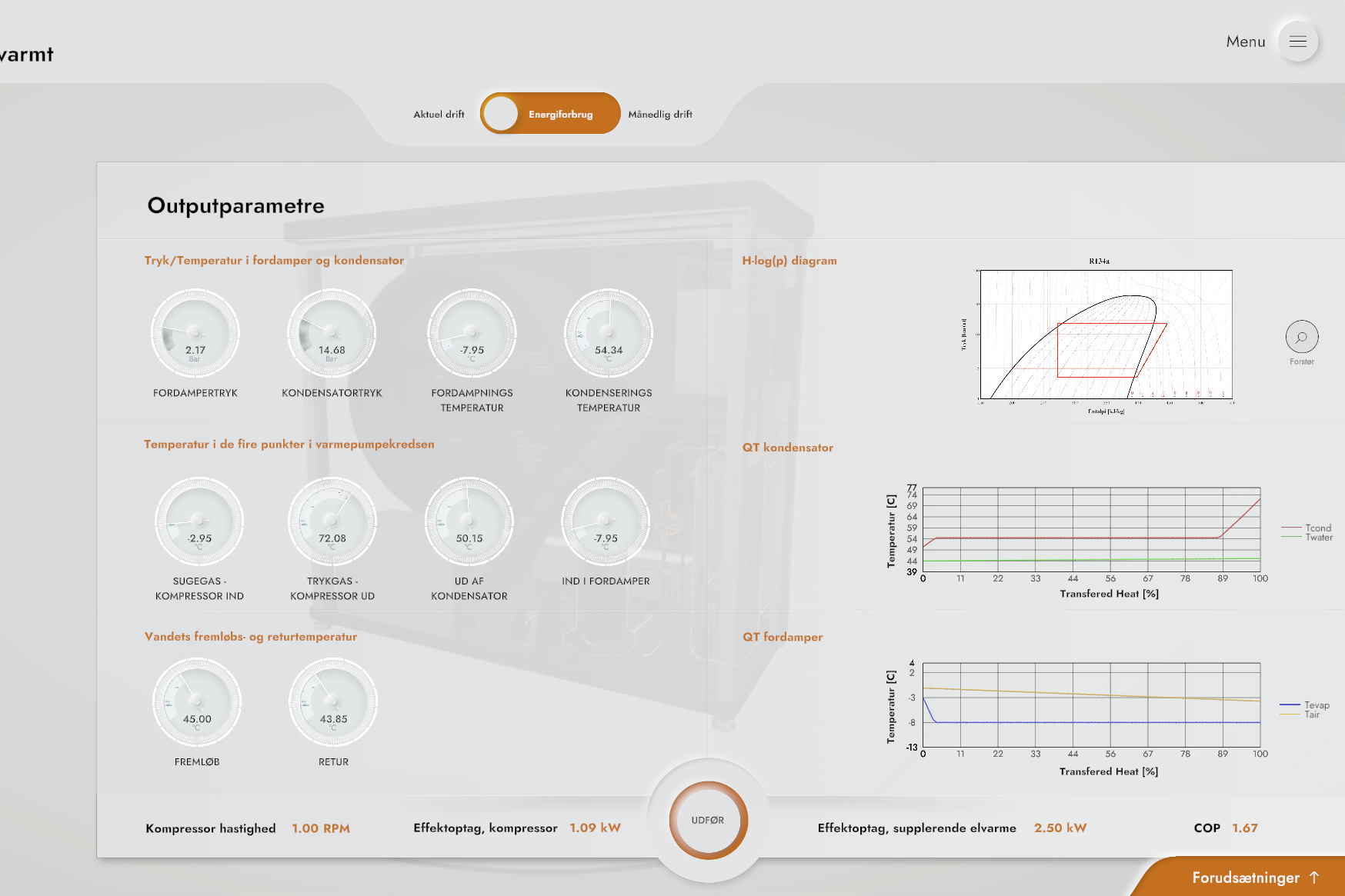
The simulator now allows trainees to interact directly with the system. Using intuitive sliders and toggles, they can explore how parameters such as water flow, heat demand, refrigerant charge and outdoor temperature affect performance.
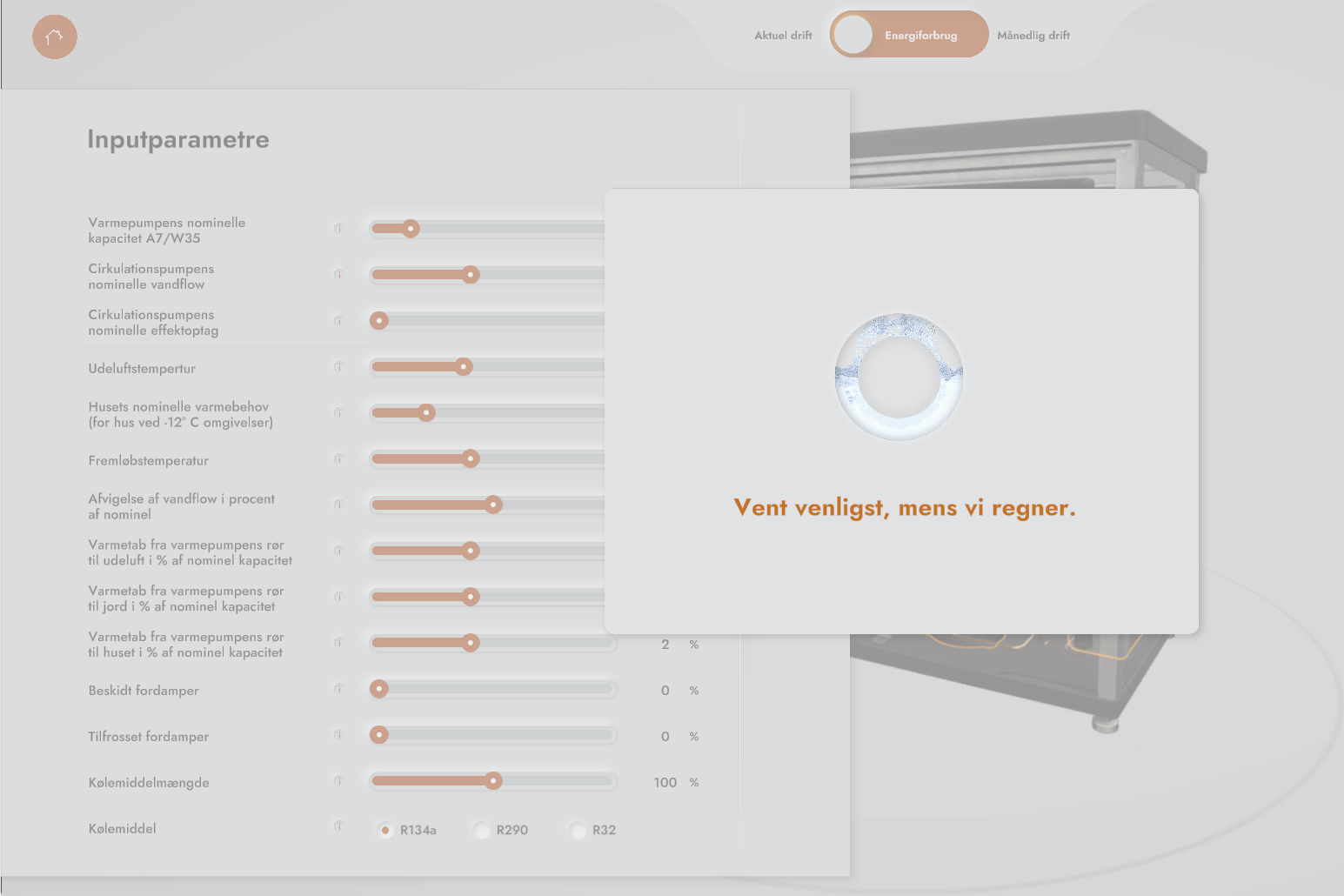
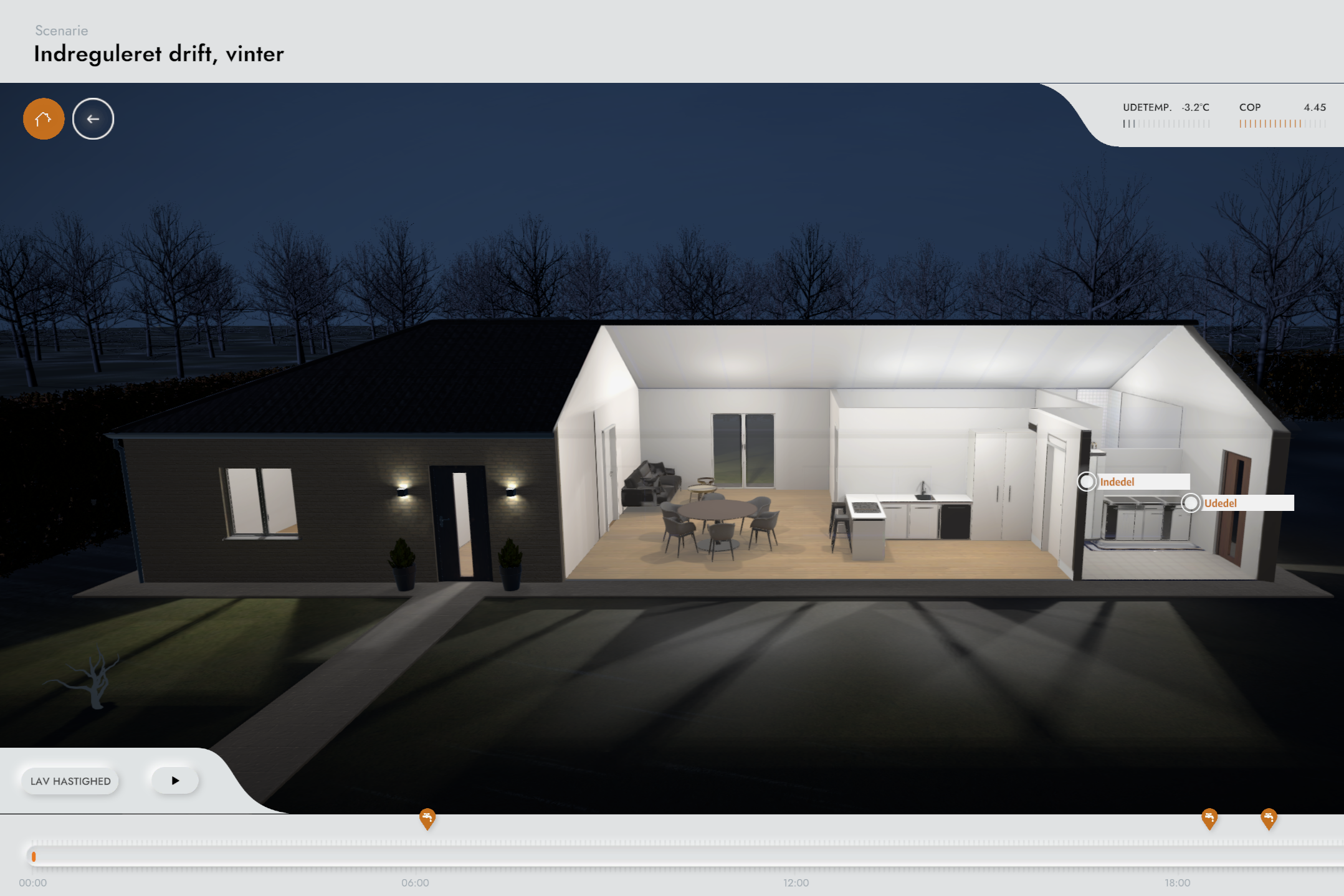
The simulator updates instantly, showing both live performance and long-term efficiency. This makes it easier to understand how technical adjustments influence the behaviour of a real heat pump and gives trainees a safe space to test assumptions and learn through exploration.
Feature #2
Realistic fault scenarios for hands-on troubleshooting
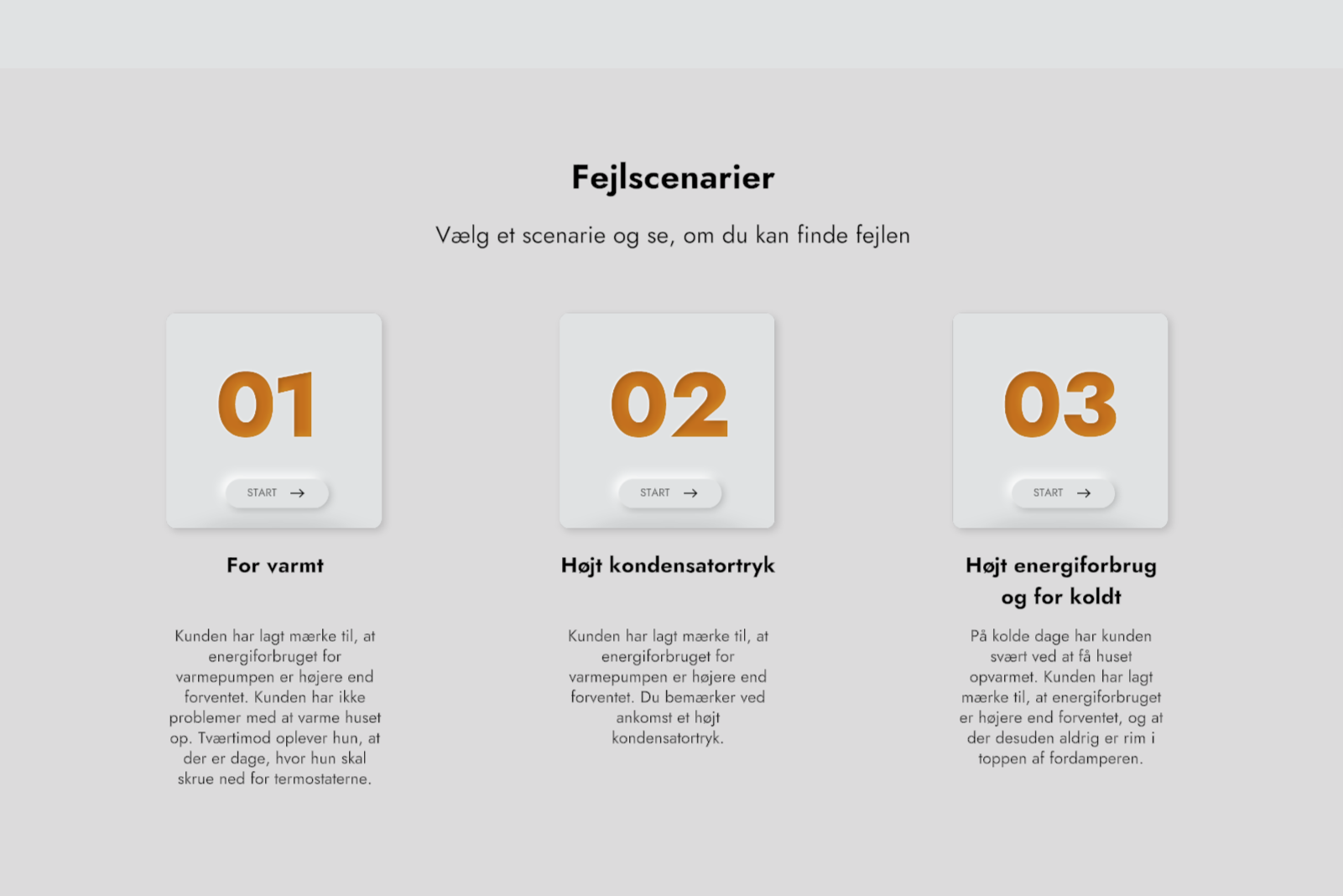
In real homes, things do not always run smoothly. To prepare trainees for the challenges they will meet in the field, the simulator now includes a series of realistic fault scenarios based on common issues.
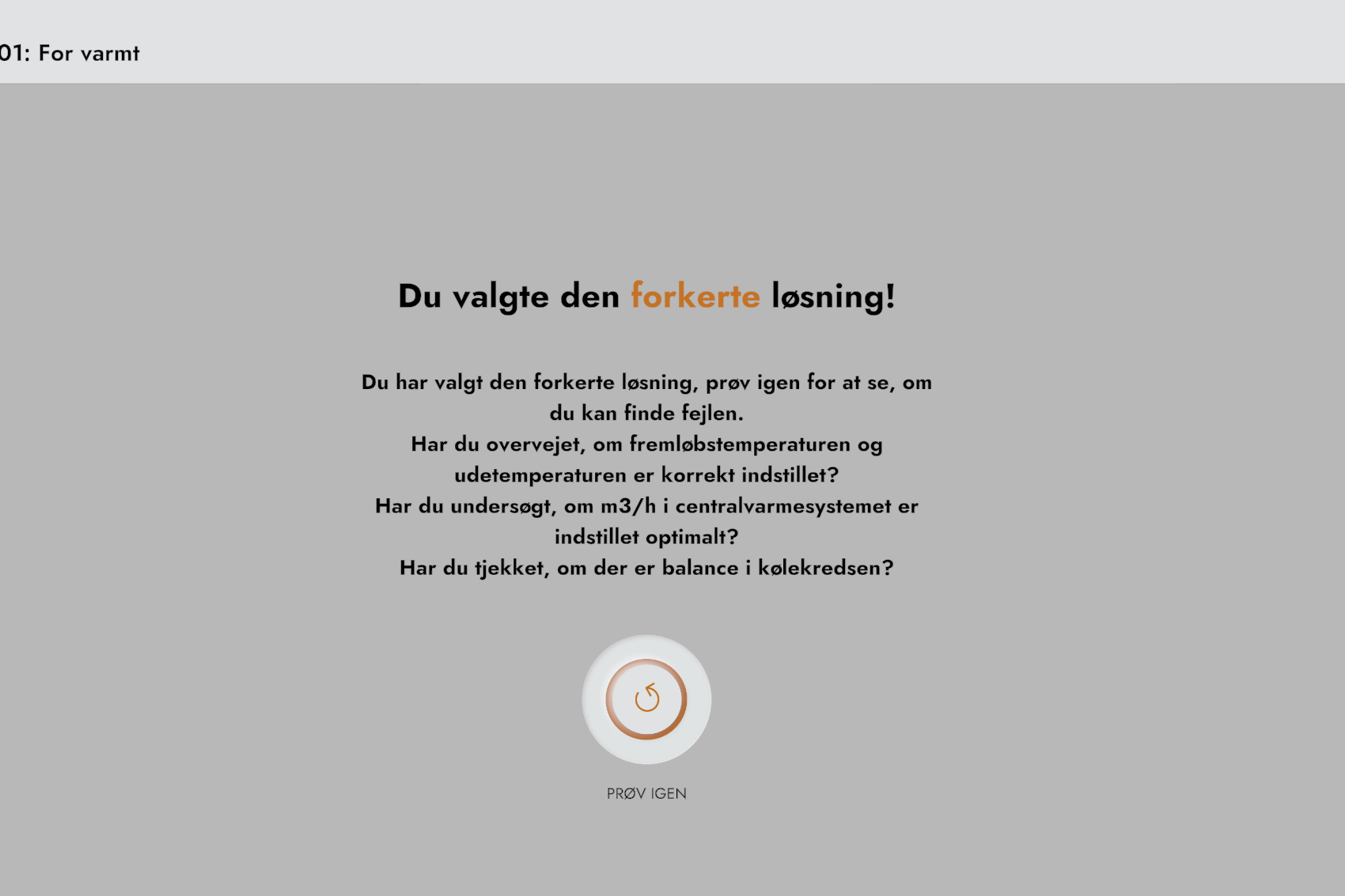
In each scenario, one parameter behaves incorrectly. Trainees test their hypothesis by adjusting the suspected parameter and pressing ‘Execute’ to see how the system responds. They receive immediate feedback, helping them assess whether they identified the correct cause.
This creates a guided, risk-free environment that mirrors real diagnostic work and strengthens troubleshooting skills.
What does this mean?
With the new features, the simulator goes beyond visualisation. Trainees can now interact with the system, test ideas and practise troubleshooting in a safe environment.
For us, this shows the value of building solutions that can grow with our clients’ needs. By expanding an existing platform, we extend its relevance and lifespan while continuing to create value for both instructors and learners.
PSST… THERE’S MORE.